Mr. Brainwash Explained: The Hidden Language of Graffiti

The works of Mr. Brainwash are instantly recognizable. Bold, vibrant, and layered with graffiti, pop imagery, and striking slogans, they capture attention at first glance. Yet beneath this visual intensity lies something far more deliberate: a carefully constructed language built from collective memory, cultural references, and the visual codes of street art.
What makes his work so powerful is its immediacy. It does not require interpretation to be felt. Instead, it operates through recognition. Viewers are drawn in by familiar images—figures, symbols, and compositions that already exist in their visual memory. This instant connection creates a sense of accessibility that defines Mr. Brainwash’s artistic identity.
At the core of his practice is the recontextualization of globally recognized icons. Figures such as Charlie Chaplin, Marilyn Monroe, Albert Einstein, and Madonna are transformed through a graffiti aesthetic into contemporary cultural symbols. This strategy recalls the legacy of Andy Warhol, yet it is infused with the raw energy of the street—where imagery is not only consumed but constantly rewritten.
Graffiti itself emerged as a form of presence. What began as simple tags evolved into complex visual statements, carrying identity, resistance, and expression. Artists like Banksy expanded this language into political and conceptual territory. Mr. Brainwash builds on this foundation, shifting it toward pop culture and global accessibility, making street art both immediate and collectible.
His works are structured through contrast. A central figure—often simple, nostalgic, or iconic—is placed against a dense, layered background that mimics the texture of urban walls. This tension between clarity and chaos is essential: the viewer first recognizes the image, then gradually absorbs the surrounding complexity.
This approach becomes particularly evident across the works presented:
In Beautiful Girl, the image of a young girl holding a heart-shaped balloon functions as a symbol of innocence. Set against an explosion of graffiti and color, the work creates a powerful contrast between vulnerability and visual noise. The image becomes more than a composition—it becomes an icon, repeated and reinterpreted across variations.
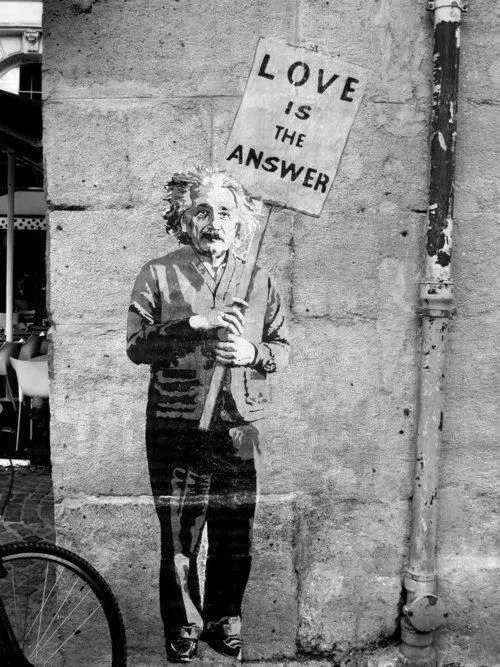
In Einstein, a historic figure is transformed into a universal message. The phrase “Love is the Answer” shifts the work beyond portraiture, turning it into a statement about human connection. Surrounded by fragmented visual elements, the message feels both urgent and accessible, reflecting the saturation of contemporary media.
Work Well Together introduces a deeper layer of reference. The image of two children seated side by side, seen from behind, is directly inspired by Norman Rockwell’s Boy and Girl Gazing at the Moon (1926). This reference anchors the work in a familiar visual language associated with innocence and companionship. Mr. Brainwash then disrupts this nostalgic scene through graffiti, bold color, and the phrase “Love is All We Need,” transforming a classic image into a contemporary reflection on unity and shared experience.
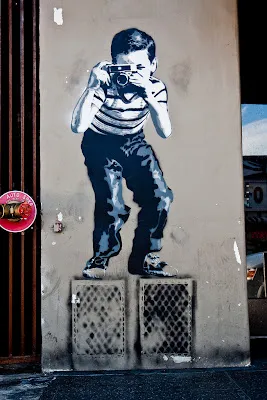
In Smile, the child holding a camera introduces a self-aware dimension. The act of photographing becomes a reflection of a culture in which reality is constantly captured, filtered, and shared. Surrounding phrases echo the language of media and advertising, reinforcing the work’s connection to contemporary visual habits.
With Keep It Unreal, the message becomes more conceptual. The phrase challenges the idea of authenticity, aligning with the artist’s broader approach of remixing reality. The work suggests that in a world saturated with images, truth itself becomes fluid—constructed through repetition and reinterpretation.
Express Yourself shifts toward empowerment. The work functions as both a statement and an invitation, reflecting the democratic origins of street art while maintaining a refined, collectible presence. It speaks directly to the viewer, reinforcing the idea that expression is both personal and universal.
Finally, Artist Within brings the narrative to its conclusion. The figure becomes a metaphor for creativity itself, suggesting that artistic expression is not reserved for a select few. Instead, it is something inherent—accessible to everyone.
Ultimately, Mr. Brainwash bridges the gap between street and gallery. His work transforms the ephemeral language of graffiti into globally recognizable, collectible imagery. By combining familiarity with visual intensity, he creates artworks that are both instantly understood and layered with meaning.
In a world defined by images, Mr. Brainwash does not compete with visual noise—he uses it. And in doing so, he creates works that are not only seen, but remembered.





 W: +39 3357055914